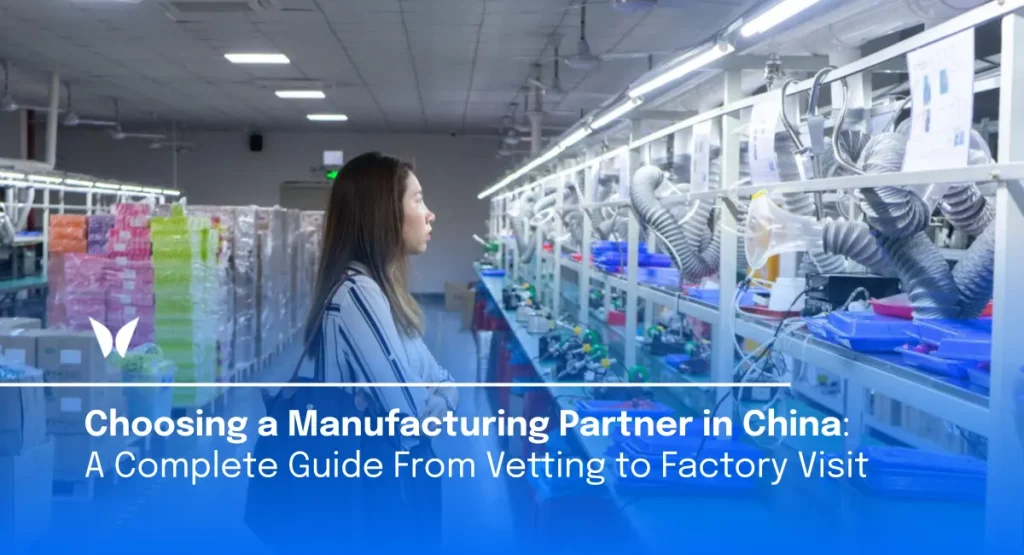
Electronics Manufacturing in China: What Founders Need to Know Before Scaling
TL;DR
- The electronics industry evolves fast; components and technologies change every 12–24 months.
- A functional prototype does not mean a product is production-ready.
- China remains the world’s electronics hub due to supplier density, component availability, and export-focused manufacturing.
- Factories build what you hand them. They do not fix manufacturability issues.
- Morpho uses the Component Control Method (CCM) to protect IP, control BOM stability, and keep your product buildable at scale.
- For founders entering the manufacturing window, understanding manufacturability is essential before moving to production.
Electronics Manufacturing in China
The electronics industry is one of the fastest-evolving in the world — a space where innovation moves fast and competition moves even faster.
According to the Ministry of Industry and Information Technology and the Hinrich Foundation, China remains the world’s electronics powerhouse, producing over 60% of global smartphones and growing steadily in electronics manufacturing over the past years.
This concentration of component suppliers, PCB fabrication, and final assembly makes China the most capable ecosystem for electronics manufacturing today.
Take a look further and explore the fundamentals of electronics manufacturing.
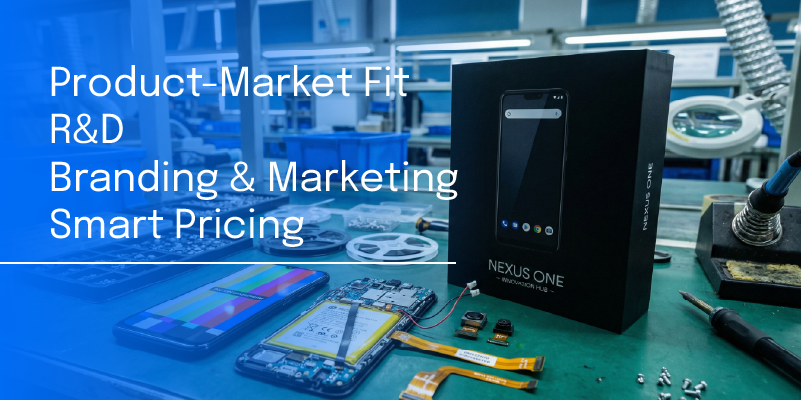
The Keys to Success for an Electronics Company
Product-Market Fit
You don’t need to be revolutionary — but you must provide value to a specific person and solve a specific need. In electronics, this goes beyond usability and includes technical viability: battery life, PCB footprint, sourcing stability, compliance requirements, and long-term maintenance. As the saying goes, if you’re not building for someone, you’re building for no one.
Research & Development
This cannot be overstated.
In electronics, component life cycles are short (many ICs and sensors are discontinued within 12–24 months), technologies update quickly, and competition iterates constantly. Devices like phones, laptops, and headphones age in months, not years. You must keep moving — or the market will move past you.
Branding & Marketing
Marketing amplifies what already exists; it cannot compensate for weak engineering. Customers expect electronics to be reliable, safe, and consistent. Your after-sales support, sustainability approach, and long-term quality will matter as much as features and design.
Smart Pricing
Electronics pricing is shaped by:
- Bill of Materials (BOM) cost
- Minimum Order Quantities (MOQ)
- Certification requirements (FCC, CE, RoHS, UL, UN 38.3 for batteries)
- Assembly complexity
- PCB layer count
- Tooling cost
- Component availability and lifecycle
With so many players in the field, it’s easy to race to the bottom — but correct pricing comes from understanding your true costs and the scale at which you manufacture.
Work with professionals to validate this early.
What Can I Expect From the Manufacturer?
Some companies only need a final design file to begin development, sourcing, and assembly.
However, if you haven’t prototyped, validated, and stress-tested your product, you should expect more from your manufacturer, especially if you have a strong, collaborative relationship.
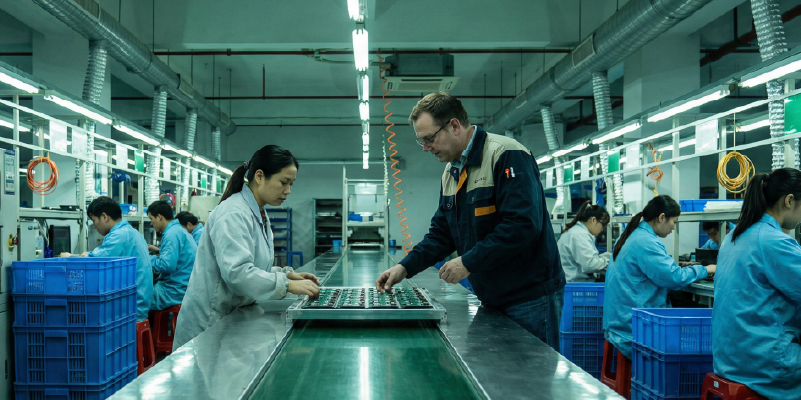
A capable partner will help you:
- Validate your BOM for availability and lifecycle
- Identify DFM issues before tooling
- Assess PCB–enclosure fit
- Flag certification requirements
- Review mechanical, electrical, and thermal concerns
Unless you are an expert yourself, you don’t want to discover late that your product could have been made cheaper, better, or both. If you want to dig deeper into this, our 7 Steps to Start Manufacturing Your Product article explains exactly how to avoid that.
What Is the Actual Manufacturing Process?
Each product is different, so there is no one-size-fits-all process. But the standard sequence looks like this:
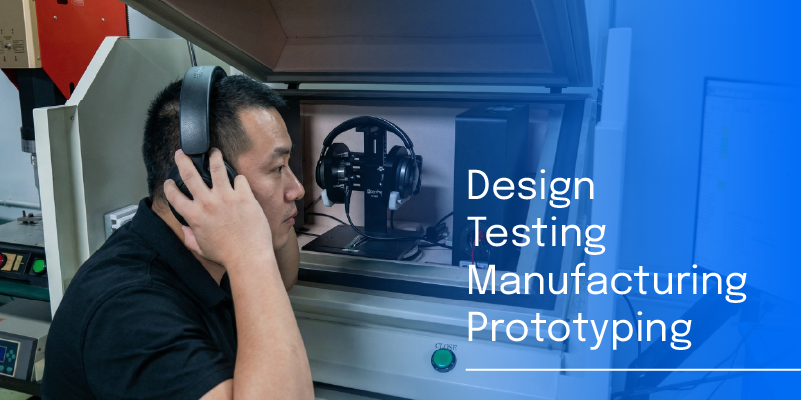
Design
From understanding customer specifications to exploring materials and existing references, design for manufacturability includes industrial design, mechanical design, and electronics design. Every decision carries cost and performance implications, which is why visualizing, prototyping, and testing are so important.
Testing
Testing includes:
- Compliance for safety
- Quality guidelines and inspection points
- PCB functionality
- Environmental testing (temperature, humidity, vibration)
- In-circuit testing
- EMC/EMI pre-compliance
- Finally, functional testing
Testing determines whether your product can legally and safely be sold in your market.
Manufacturing
Techniques vary depending on the device:
- Printed Circuit Boards (PCBs)
- Microelectronics
- Optoelectronics
- RF/Wireless
- Injection molding for enclosures
- Surface-mount assembly (SMT)
Each category requires specific expertise and equipment.
Prototyping
Providers often build early samples after the design phase. This is where you work out mechanical, electrical, or user-experience issues before mass production. Prototyping may occur several times throughout design and planning.
The Final Manufacturing Checklist
Concept
Research
Circuit Design
Packaging & Printed Circuit Design
Prototyping
Review
Documentation
Compliance
Logistics & Follow-up
This checklist forms the basis of a complete product development and manufacturing cycle, ensuring that nothing is overlooked before production.
Why Should You Manufacture Electronics in China?
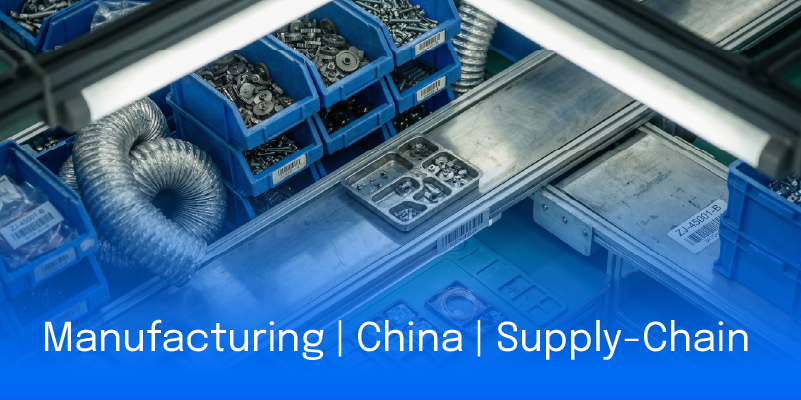
Due to the structure and sheer scale of China’s supply chain, most China-manufactured electronics are built for export. China is not just a large production base — it is the global production base for electronics.
Verified data from global export reports confirm:
- China accounts for over 60% of global smartphone production
- China produces more than 50% of the world’s PCB volume
- The Guangdong region (Shenzhen, Dongguan, Guangzhou) remains the world’s largest electronics sourcing cluster
In Apple’s latest supplier list, there are more than six times as many major supplier facilities operating in China than in the United States. This illustrates how deeply global brands rely on the Chinese ecosystem for components, tooling, and assembly.
Morpho has a long history of manufacturing innovative electronics products for clients across six continents. The combination of engineering oversight, supplier control, and manufacturing specialization is what enables predictable, high-quality production.
A variety of factors work together to create this advantage:
- The scope of activities offered
- The range of certifications supported
- Industry-leading IP protection through the Component Control Method (CCM)
- Competitive and stable costing
- Technical depth of vetted factories
- Strength of production capability and component procurement
- Comprehensive quality assurance
Whether you’re launching an innovative new electronics product or moving an existing one to a more reliable production environment, China remains the most capable ecosystem — and Morpho can manage every step of that journey.
FAQ (2026)
Why is China the leading location for electronics manufacturing?
China—especially Shenzhen and the broader Guangdong region—has the world’s most concentrated electronics ecosystem. PCB fabrication, component markets, battery suppliers, mold shops, and assembly lines are all located within hours of each other. This reduces cost, speeds up prototyping, and makes scaling significantly more predictable than in any other region.
How do I know if my electronics prototype is ready for manufacturing in China?
A prototype is ready only after completing DFM, BOM validation, PCB–enclosure alignment, and material selection appropriate for Chinese suppliers. A working prototype is not enough—Chinese factories require production-ready files (CAD, Gerbers, BOM) before tooling.
What engineering files do manufacturers typically require?
Most factories expect:
CAD files (STEP/IGS)
PCB Gerbers
A complete, localized BOM
Firmware (if applicable)
Assembly drawings
Preparing these files correctly reduces delays and prevents misinterpretation during production.
What certifications do I need for electronics made in China?
The most common certifications are:
FCC for the U.S.
CE RED/LVD for Europe
RoHS compliance
UN 38.3 for lithium battery products
Shenzhen and Guangzhou have accredited labs that process these certifications for China-made devices.
How do I avoid middlemen when manufacturing electronics in China?
True factories will disclose their location, production capabilities, and business licenses. Middlemen typically avoid revealing the actual facility. Working with vetted partners—especially those based in Guangdong—helps ensure you’re dealing with real manufacturers, not trading companies.
What’s the safest first step before manufacturing electronics in China?
Scheduling a Discovery Call with Morpho allows you to confirm prototype readiness, evaluate component availability in Shenzhen, understand DFM requirements, and map out the correct manufacturing path before entering production.
Morpho Is Your One-Stop Shop for Electronics Manufacturing in China
If you want to understand how your product can be manufactured more efficiently — or whether your current design is ready for production — the best next step is a Discovery Call.
What is a Discovery Call?
- A free and no-commitment 30-minute session to assess your product, understand Morpho’s process, and map your next steps.
- We’ll validate if your design is manufacturable and compliant.
- You’ll gain guidance on risks, timelines, and our proven premium-build process.
Book a Discovery Call and learn how Morpho can help you bring your electronics product to life.
Author & Last updated
MorphoMFG Engineering Team — Expert, bold, people-first guidance for hardware founders.
- Last updated:
Table of Contents